.png)

.png)
If you are considering a career change and keep hearing about data analytics but are not sure what data analysts actually do, you are not alone. Many people exploring tech careers worry that data analytics sounds too technical or only suitable for people with math or computer science degrees.
The reality is different.
Data analytics is one of the most career-changer-friendly roles in tech.
It values problem-solving, communication, and business thinking just as much as technical skills. Many data analysts start in completely different fields and transition successfully with the right training and support.
This guide explains what data analysts really do, the tools they use, and how career changers can break into data analytics step by step.
What Is Data Analytics in Simple Terms?
Data analytics is about using data to answer questions and support better decisions.
Companies collect data from sales, customers, operations, marketing, and internal systems. A data analyst helps turn that raw information into insights leaders can actually use.
Instead of guessing, organizations rely on data analysts to explain:
- What is happening
- Why it is happening
- What actions could improve results
You do not need to be a math genius to do this work. You need curiosity, structure, and the ability to explain findings clearly.
What Does a Data Analyst Actually Do Day to Day?
For career changers, it helps to understand what the job really looks like in practice.
1. Organizing and Cleaning Data
Most analysts spend time preparing data before analysis.
This includes:
- Fixing errors
- Removing duplicates
- Formatting spreadsheets or databases
- Making sure data is accurate and consistent
This step rewards attention to detail, something many career changers already have from operations, admin, finance, or customer-facing roles.
2. Analyzing Data to Answer Business Questions
Once data is ready, analysts explore it to find trends and patterns.
Examples include:
- Why did customer signups drop last month?
- Which services perform best by location?
- How do costs change over time?
Analysts use tools like Excel, SQL, and Python to explore and summarize data in meaningful ways.
3. Building Reports and Dashboards
Data analysts do not just work behind the scenes. They communicate insights visually.
Using tools like Tableau or Power BI, analysts create dashboards and charts that make complex information easy to understand for non-technical teams.
This is where communication skills matter just as much as technical ability.
4. Explaining Insights and Recommendations
One of the most important parts of the role is explaining what the data means.
Analysts often present:
- Key findings
- Risks or opportunities
- Suggested next steps
Career changers with experience in business, education, healthcare, or management often excel here because they already know how to communicate clearly.
Common Tools Used in Data Analytics
Most entry-level data analytics roles rely on a practical core toolset.
- Excel for data cleaning and analysis
- SQL for working with databases
- Tableau or Power BI for visualization
- Python for deeper analysis and automation
Skillspire’s Data Analytics program focuses on teaching these tools through hands-on projects, not just theory.
Explore the course here:
https://www.skillspire.net/courses/intro-to-data-analytics
Is Data Analytics a Good Career Change?
Yes. Data analytics is widely considered one of the most accessible tech career paths for career changers. According to the US Bureau of Labor Statistics, data-related roles continue to grow as organizations rely more on data to guide decisions.
Source:
https://www.bls.gov/ooh/math/data-scientists.htm
Why Career Changers Often Excel in Data Analytics
One of the biggest misconceptions about data analytics is that you need to start from zero or leave your past experience behind.
In reality, career changers often have a strong advantage.
If you come from a specific industry, such as operations, marketing, finance, healthcare, education, logistics, or the military, you already bring domain knowledge. That domain expertise helps you ask better questions, interpret data more accurately, and connect insights to real business outcomes.
This is why many companies value analysts who understand both the data and the industry behind it.
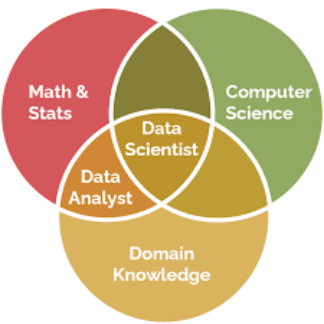
The diagram above illustrates an important distinction:
- Data Analysts sit at the intersection of domain knowledge and analytical skills
- Data Scientists lean more heavily into advanced math, statistics, and computer science
For career changers, this is good news.
You do not need to master advanced machine learning or complex algorithms to create impact as a data analyst. What matters is your ability to combine:
- Practical business or industry experience
- Analytical tools like Excel, SQL, and visualization
- Clear communication and problem-solving
For example:
- A healthcare professional understands patient workflows and operational bottlenecks
- A marketing specialist understands customer behavior and campaign performance
- An operations or admin professional understands processes, reporting, and efficiency
- Veterans bring structured thinking, accountability, and decision-making under pressure
When paired with data analytics skills, this domain expertise allows analysts to deliver measurable outcomes, not just charts or reports. This is also why data analytics is often one of the strongest and most realistic entry points into tech for career changers.
How Skillspire Supports Career Changers
Skillspire was built specifically to support learners from non-traditional backgrounds.
Hands-On, Beginner-Friendly Learning
Courses focus on practical skills and real projects that reflect what analysts actually do on the job.
Career and Job Search Support
Students receive:
- Resume and LinkedIn optimization
- Portfolio development
- Unlimited mock interviews
- Career counseling and guidance
- Referrals to internships and job opportunities
Job placement support begins early, while remaining transparent that employment is not guaranteed.
Funding and Accessibility
Skillspire works with workforce programs such as the Worker Retraining Program to help eligible Washington State students reduce tuition costs. Funding availability varies and requires approval.
Apply or explore funding options here:
https://www.skillspire.net/admission/washington-worker-retraining-wrt-program
What Roles Can Data Analytics Skills Lead To?
Career changers often apply data analytics skills across many roles, including:
- Data Analyst
- Business Analyst
- Operations Analyst
- Reporting Analyst
- Analytics Specialist
These roles exist across industries, giving career changers flexibility and long-term growth options.
For an external overview of data analytics responsibilities, see IBM’s guide:
https://www.ibm.com/topics/data-analytics
Is Data Analytics Right for Your Career Change?
Data analytics may be a good fit if you:
- Want a practical, skill-based career
- Enjoy problem-solving and pattern recognition
- Like explaining insights clearly
- Want flexibility across industries
You do not need a tech degree. You need structured training, hands-on practice, and guidance.
Take the First Step Toward a Data Analytics Career
If you are exploring a career change into tech, data analytics offers a realistic and supportive entry point.
Explore Skillspire’s Data Analytics course
Book a call with Career Counselor
Your previous experience is not a disadvantage. With the right skills and support, it can be your strongest asset.
.png)


