

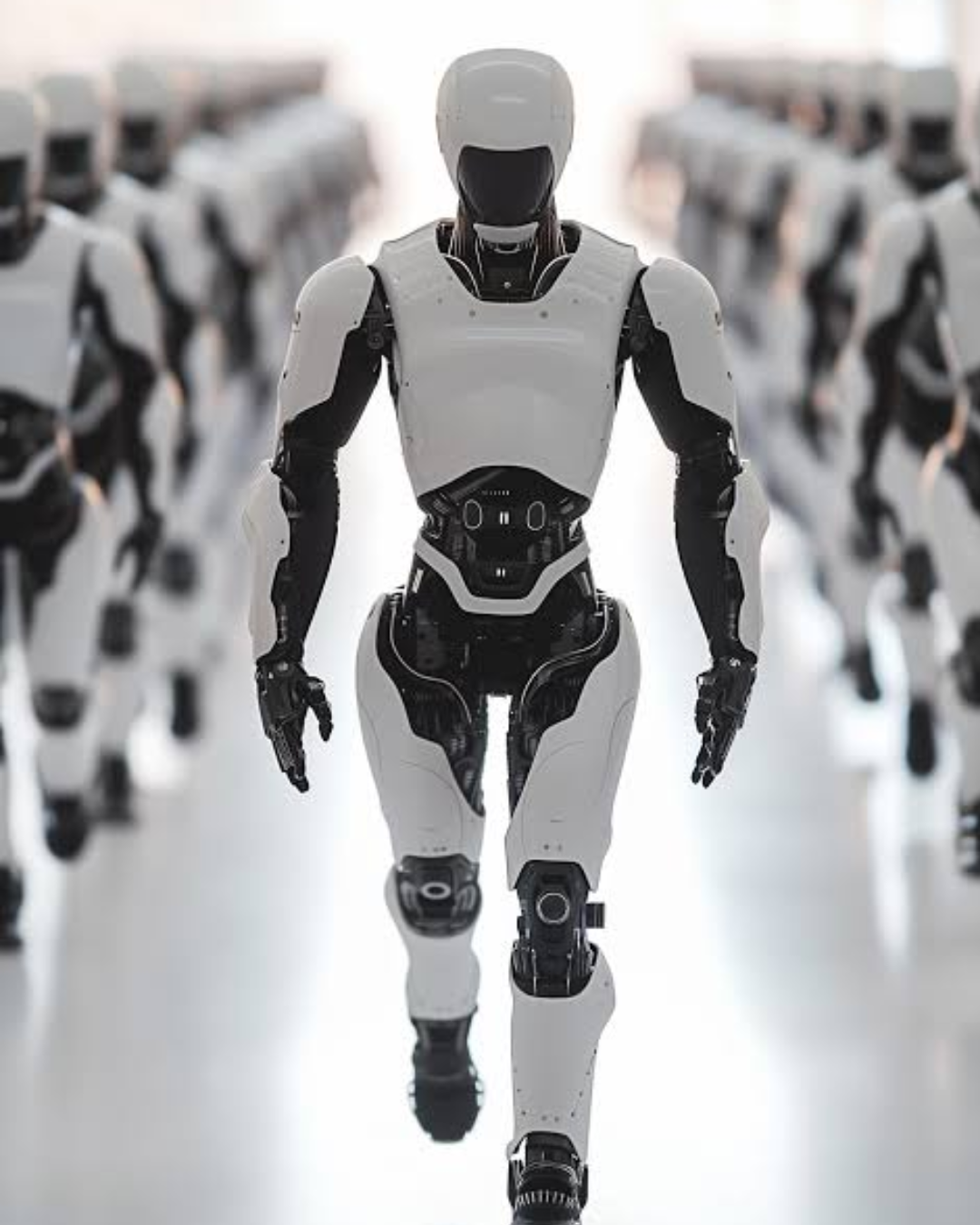
For most of history, workers had a simple deal with technology. Machines took over the heavy lifting, and humans kept the thinking. Then AI started writing, coding, analyzing, and designing. Now humanoid robots are walking into warehouses and factories to take on the physical side too.
So the question people are quietly asking at dinner tables and in group chats is a fair one: if software can do the thinking and robots can do the lifting, what exactly is left for us?
The short answer is: more than the headlines suggest, but not in the places most people are looking. This post breaks down what is really being automated, what is not, and what to do about it, whether you are a student, a mid-career professional, a business owner, or a manager trying to plan ahead.
The short answer
Humans keep the work that depends on accountability, trust, judgment in messy situations, and physical presence in unpredictable places. AI and robots keep getting better at tasks. They are much weaker at owning outcomes. That gap is where most human work is moving.
The more useful way to think about it is that jobs are not disappearing in one piece. They are being taken apart into tasks, and some of those tasks are handed to machines. What remains is a different job, often a better one, sometimes a smaller one, and occasionally one that no longer exists.
Jobs are bundles of tasks, and that changes the math
When people say "AI will take X jobs," they are usually treating a job like a single block. It is not. A accountant does bookkeeping, but also chases clients for documents, explains a tax decision to a nervous business owner, spots something that looks wrong, and decides what to do about it.
Automation tends to peel off the most repeatable pieces first. Drafting, summarizing, data entry, first-pass analysis, basic customer replies, scheduling, standard code. These are the tasks that are well documented, easy to check, and done thousands of times.
What that does to a role depends on what is left in the bundle:
• If the leftover tasks are valuable and the person can now do far more of them, the job grows in importance and often in pay.
• If the leftover tasks are thin, the job shrinks or merges into someone else's.
• If nearly everything in the bundle was repeatable, the job is at real risk.
This is why two people with the same job title can face very different futures. It depends on what they actually spend their days doing.
Why humanoid robots are slower than the videos make them look
Polished demo videos make it seem like robots will be stocking every shelf by next year. Reality is more stubborn, and there is a well-known reason for it.
An idea called Moravec's paradox points out that things hard for humans, like complex math or chess, turn out to be relatively easy for computers, while things we find effortless, like folding a towel or walking across a cluttered room, are extremely hard for machines. Billions of years of evolution tuned our bodies and senses. Software caught up on logic much faster than hardware has caught up on dexterity.
A few practical limits slow humanoid robots down:
• Reliability . A demo that works nine times out of ten is a product that fails constantly in a real shift.
• Cost. A robot has to beat the all-in cost of a human worker, including maintenance, downtime, and supervision, not just the sticker price.
• Safety. Machines that share space with people face strict safety demands, and the rules are still catching up.
• Messy environments. Factories can be redesigned around robots. Homes, hospitals, construction sites, and small businesses cannot.
Expect robots to take over narrow, structured physical tasks first, such as moving boxes in controlled warehouses. Work that requires adapting to a different situation every hour will stay human for longer than most predictions suggest. That does not mean it stays safe forever, but the timeline is measured in years and decades, not months.
What humans still do better, and why it matters
Here is where I think the real insight sits. The things that remain valuable are not random. They share a pattern.
1. Owning the outcome
An AI can produce a legal draft, a medical summary, or a financial model. It cannot be held responsible when that output is wrong. Someone has to sign, stand behind, and answer for the result. As machines produce more output, the person who verifies it and takes responsibility becomes more valuable, not less.
Think about it this way: the cost of producing a first draft is collapsing toward zero. The cost of being wrong has not changed. That shifts the premium from making things to judging things.
2. Judgment when the rules run out
Most real work involves situations the manual did not cover. A client changes their mind. Two priorities conflict. The data is incomplete and the deadline is tomorrow. People who can make a sound call with partial information, and explain why, remain hard to replace.
3. Trust and human relationships
People still want to buy from, be treated by, and be taught by someone they trust. A nurse reassuring a frightened patient, a teacher who notices a student is struggling, a salesperson who has known a client for ten years. This is not a soft skill tacked on to "real" work. In many fields, it is the work.
It is worth noticing that as AI-generated content floods every channel, confirmed human attention becomes scarcer and more prized.
4. Taste and direction
AI can generate a thousand options. Someone has to decide which one is right for this audience, this brand, this moment. Knowing what is worth making, and what to leave out, is a form of judgment that comes from experience and a point of view. Tools make production cheap. They do not supply a reason to produce.
5. Physical skill in unpredictable settings
Electricians, plumbers, caregivers, field technicians, and many skilled trades work in environments that never repeat exactly. Every house has its own wiring surprises. These jobs combine hands, eyes, problem solving, and customer interaction in a way that is difficult to automate at reasonable cost.
The uncomfortable part nobody should skip
It would be easy to end on a hopeful note, but that would not be honest. Three real problems deserve attention.
The entry-level ladder is under pressure.
Many careers have trained people through repetitive early-stage tasks: junior analysts doing research, junior developers fixing simple bugs, junior writers producing routine copy. If machines take those tasks, how do beginners build the experience that leads to senior judgment? Companies and schools will need to design new ways to train people, or they will find themselves with no one to promote in ten years.
The transition is uneven.
Even if new roles appear, they do not always appear in the same place, at the same pay, or for the same people who lost the old ones. A displaced worker cannot simply wait for the long-run average to work out. Policy, retraining, and support matter, and individuals should not assume the market will sort it out gently.
Gains may concentrate.
If the benefits of automation flow mostly to those who own the machines, the result is more inequality even if total output rises. How that plays out depends on choices made by businesses and governments, not on the technology alone.
None of this means panic. It means treating the shift seriously and planning for it.
How to future-proof your work: a practical plan
If you want something you can act on this month, here is where I would start.
1. Audit your own tasks.
Write down what you actually do in a typical week. Mark each task as repeatable, judgment-based, or relationship-based. The repeatable pile is what you should learn to hand to AI before someone else does it for you.
2. Become the person who uses the tools best in your field.
In most workplaces, the realistic near-term threat is not "AI replaces you." It is "someone who uses AI well replaces someone who does not." Get hands-on. Use these tools on real work, learn where they fail, and develop a feel for when to trust them.
3. Build verification skills.
Learn to check AI output quickly and critically. Spotting a subtle error, a made-up source, or a flawed assumption is becoming a core professional skill.
4. Go deeper in your domain.
General knowledge is now cheap. Deep, specific expertise that lets you tell good from almost-good is not. The more you understand the underlying field, the better you can direct and correct the tools.
5. Invest in people skills.
Negotiation, clear communication, leading a team, handling a difficult conversation, teaching. These compound over a career and are hard to copy.
6. Stay adaptable.
Treat learning as a recurring habit, not a phase of life that ended at graduation. The people who do well will be those who can change what they do without losing who they are professionally.
For business owners and managers
If you run a team, the temptation is to ask only how many roles can be cut. A better question is what your best people could do if the repetitive work vanished.
• Redesign roles around judgment, customer relationships, and quality control.
• Keep a path for junior staff to learn, even if some of their old tasks are automated.
• Add clear human accountability wherever AI output affects customers, money, or safety.
• Involve employees in deciding how tools are adopted. They know where the real friction is.
Companies that use automation only to cut costs often end up with thinner service and lost knowledge. Those that use it to raise quality and capacity tend to build something competitors cannot easily copy.
My honest take
The most useful frame I know is this: when something becomes cheap to produce, the scarce thing moves somewhere else. Writing, coding, analysis, and design are getting cheaper to produce. What gets scarcer, and therefore more valuable, is knowing what to ask for, checking that it is right, and taking responsibility for what happens next.
That suggests the future is less "humans versus machines" and more "humans who direct machines versus humans who are directed by them." The aim is to end up on the first side of that line. It takes deliberate effort, and it is available to a lot more people than the doom headlines imply.
The work that remains is not leftovers. It is the part of work that was always the hardest to do well: deciding, caring, and being accountable.
Frequently asked questions
Will AI and robots take all human jobs?
No credible evidence points to all jobs disappearing. Technology changes the mix of tasks in nearly every occupation, eliminates some roles, and creates others. The bigger concern is how fast the change happens and how well workers are supported through it.
Which jobs are least likely to be automated soon?
Roles that combine physical skill in unpredictable settings, deep human trust, or high-stakes accountability tend to be more resilient. Examples include skilled trades, nursing and caregiving, teaching, therapy, complex negotiation, and senior leadership. Resilient does not mean unchanged, since AI tools will still reshape how these jobs are done.
Which jobs are most at risk?
Jobs made up mostly of repetitive, well-documented, easily checked tasks face the most pressure. That includes parts of data entry, routine customer support, basic content production, and standard administrative work.
How soon will humanoid robots replace workers?
Progress is real, but widespread replacement in unstructured environments is likely to take much longer than demo videos imply, because of reliability, cost, and safety hurdles. Expect early adoption in controlled settings such as warehouses and factories.
What skills should I learn to stay relevant?
Focus on using AI tools effectively, verifying their output, deep expertise in your field, communication, leadership, and the ability to keep learning. A mix of technical comfort and strong human skills is the safest combination.
Is it too late to change careers because of AI?
No. Many people successfully shift into roles that use their existing experience in new ways. Starting early gives you more options, but there is no deadline after which adapting stops working.
The bottom line
AI is taking over more of the thinking tasks and robots are slowly taking over some of the physical ones, but work is much more than a list of tasks. It is judgment, trust, responsibility, and direction, and those remain stubbornly human.
The people who thrive will not be the ones who ignore the technology or the ones who fear it. They will be the ones who learn to work with it while getting better at what only people can do.
What part of your own job do you think is safest, and what part do you think will change first? Share it in the comments. The best insights usually come from people doing the work.


